An employee carpool program can match riders well and still fail in the parking lot: the carpool permit holder drives in alone on Monday, and the signed spaces are fought over on Tuesday and empty by Friday. Hybrid schedules strain the classic design, and five plain rules can fix it.
- Preferred parking for carpools has a mixed record: it helps where parking is scarce, and older case studies show set-aside spaces that sat almost unused.
- Bundles beat single perks: in one multi-metro study (2004 data), combined incentives cut participants' commute vehicle miles 15%-17%, against 4.2%-4.8% for financial incentives alone.
- About a quarter of US full-time employees are hybrid (25.5%), so qualify the car on the day, not a group on paper.
- Size carpool parking from its fill rate over 4 to 6 weeks; the only published ratio, LEED v4's 5%, is a certification requirement.
- A booking tab can show which carpool claimed a space if the booking is named for its riders; it cannot verify that two people are in the car.
What is an employee carpool program?
Call it workplace carpooling, car sharing to work or part of a commute trip reduction program; the parking mechanics are the same.
An employee carpool program uses workplace rules and perks to get two or more employees sharing one car to work. A common core is preferred parking for carpools: a few close-in spaces reserved for cars that arrive with two or more people, often paired with ride matching and a guaranteed ride home.
This guide covers the parking half, because that is where hybrid schedules cause trouble.
Why carpool parking breaks under hybrid schedules
Carpooling is a minority habit. In the 2024 American Community Survey, 15,173,622 of 165,360,450 US workers carpooled to work, about 9.2%, while 114,469,544 drove alone (US Census Bureau, table B08301). Most carpools are small: 11,066,823 of those carpoolers rode with just one other person.
The classic program assumes the same people ride together every day. Duke University's carpool rules are a clean example: carpools of two or three share an annual permit, and members "commit to riding together daily, except when a member uses their flexible day pass" (Duke Parking & Transportation).
Fewer employees keep that kind of schedule. WFH Research survey data for September 2025 to August 2026 puts 25.5% of US full-time employees in hybrid arrangements, against 62.8% fully on site and 11.7% fully remote. Attendance also bunches midweek: access-control vendor Kastle reported Tuesday, October 27, 2026 as the national peak day at 66.7% of pre-pandemic occupancy, against a weekly average of 56.5%, in the ten large metros it tracks.
We found no study that measures how fixed carpools fare under hybrid schedules, so treat this as reasoning. When riders come in on different days, a group permit ends up on a solo driver's dashboard, and spaces are contested on peak days and idle on quiet ones. Qualify the car that shows up, not a group on paper.
What the evidence says about preferred parking for carpools
Preferred parking for carpools has an uneven record, and most of the evidence is old. A 1995 Federal Transit Administration report says it is "more applicable where parking demand meets or exceeds supply" and that "experience shows mixed effectiveness." Early case studies at employers such as GEICO and the Pentagon showed carpool rates up about 100 percent on average, a figure from a 1977 federal handbook.
The same report records the failures. Seattle required developers to reserve at least 20 percent of parking spaces for carpools and saw "very little use of preferential spaces by employees," and in Sunnyvale, California, "few if any carpoolers used the stalls."
The strongest current evidence is about combinations. A 2025 UC Davis brief written for the California Air Resources Board reviews a multi-metro study using 2004 data: participants' commute vehicle miles fell 4.2%-4.8% with financial incentives alone, 7%-8% with services such as a guaranteed ride home and carpool matching plus information, and 15%-17% when all three were combined. The brief also warns that in multi-benefit programs, "it is difficult to separate the effect of specific incentives."
So reserved carpool parking is a supporting incentive: it works where spaces are scarce, and best next to another perk. Small lots are where this question comes up: in a recent sample of Parking Pro bookings, many lots had only a handful of named spaces.
Five rules for reserved carpool parking spaces
Published programs share a core: two or more people in the car, some registration, a visible marker and spot checks. The rest is a choice. These five rules keep the core and make the choices for a hybrid office.
- Qualify the car on the day
Two or more people in the car that day earn the space; a group on paper does not.
- Start small and size from fill rate
Set aside one or two spaces, count the days each is claimed for four to six weeks, then adjust.
- Claim the space per day
The carpool that is actually riding books the space, ideally the evening before.
- Check lightly and name who checks
A named coordinator compares claims with the cars in the spaces once or twice a week.
- Pair it with another incentive
Add a guaranteed ride home, ride matching, or a charge or cash-out for solo parking.
1. Qualify the car on the day, not a group on paper
The Perimeter Connects preferential parking guide (a two-page PDF from an Atlanta-area transportation management association) puts it plainly: "Only vehicles with two or more carpool or vanpool participants should be allowed access," and employees "should not have access to use the designated parking spots on days that they drive alone." Two is the right minimum, since most carpools are two people. The FTA report flags one more choice to settle up front: must riders arrive together, or does a drop-off count?
2. Start small and size from the fill rate
We found no published rule that predicts how many carpool spaces will fill. The only ratio in circulation is a certification requirement: LEED v4 asks for preferred carpool parking on 5% of total spaces (LEEDuser), which shows what earns a credit, not what gets used. Our suggestion: set aside one or two spaces and count the working days each is claimed over four to six weeks. Mostly claimed, add one. Mostly empty, move them closer, add an incentive or stop. Accessible spaces always come first: they must sit "on the shortest accessible route to an accessible entrance" (US Access Board).
3. Claim the space per day, not per month
Permits suit fixed groups; hybrid riders need a daily claim, where the carpool actually riding books the space for that day, ideally the evening before. Perimeter Connects lists first-come, first-served and monthly reservations as options, and the Bay Area's 511 carpool strategies advise pricing parking flexibly and avoiding "monthly commitments or reduced monthly rates compared to daily rates." People already book close to the day: in a recent two-day sample of Parking Pro bookings, roughly two thirds started within 24 hours of being made. Read that as a hint, not a trend.
4. Check lightly, and name who checks
Enforcement has a real cost, so decide it before launch. The FTA report recommends "spot check monitoring" and says that where there is no parking staff, "a transportation or parking coordinator must be designated." Pick the lightest check you can sustain: a coordinator who compares claims with the cars in the spaces once or twice a week, a hangtag, or a monthly self-reported trip log on the honor system, the lightest option Perimeter Connects describes. Write down what happens after a repeat solo use.
5. Pair the space with at least one other incentive
A guaranteed ride home covers the day a driver cannot take passengers home. 511's how-to guide says programs typically cap use at 3-5 times per year and that, by most studies, they are "not used that frequently by employees, yet they provide a safety net." Some regions offer one free to employers (511 says so for the Bay Area), so ask your regional commuter program first.
Ride matching helps people find a partner, but 511 says it works best with 250 employees on site or close by. A 60-person office may do better with a sign-up sheet.
Pricing solo parking is the other option where you control the lot. California's parking cash-out law requires employers of 50 or more in nonattainment air basins that offer a parking subsidy to offer a cash allowance instead. In case studies from 1992-1995, cash-out moved carpool share from 14% to 23% at participating worksites (UC Davis for CARB).
Get the US tax facts right. Under IRS Publication 15-B, the vanpool exclusion covers a "commuter highway vehicle" that seats at least six adults not counting the driver, so an ordinary carpool does not qualify. Carpools appear only in the definition of qualified parking, capped at $340 a month in 2026. And before the company organizes rides itself, check with your insurer.
When carpool spaces will not move the needle
Three situations blunt the program.
Free parking is plentiful. A close-in space is only a perk when ordinary spaces are scarce or far. A 2025 UC Davis brief on parking pricing cites an estimate that 85% of US employers provide free on-site parking.
Transit is strong. The FTA warned that preferential parking "may encourage some switching from transit to carpooling," moving people between shared modes rather than out of solo cars.
Nobody lives near each other. UC Davis calls evidence for small worksites "scant," and notes that shared rides are easier with "a large employee pool."
Hybrid has not killed carpooling, though. In the Washington, DC region's 2025 commute survey, 51% of carpoolers and vanpoolers were satisfied with their commute, 7 points above drive-alone commuters (MWCOG).
How Teams Pro helps
Parking Pro is a parking app for Microsoft Teams. It does not run a carpool program, but it gives rule 3 a home: carpool spaces become named, bookable places on the same board as the rest of the lot.
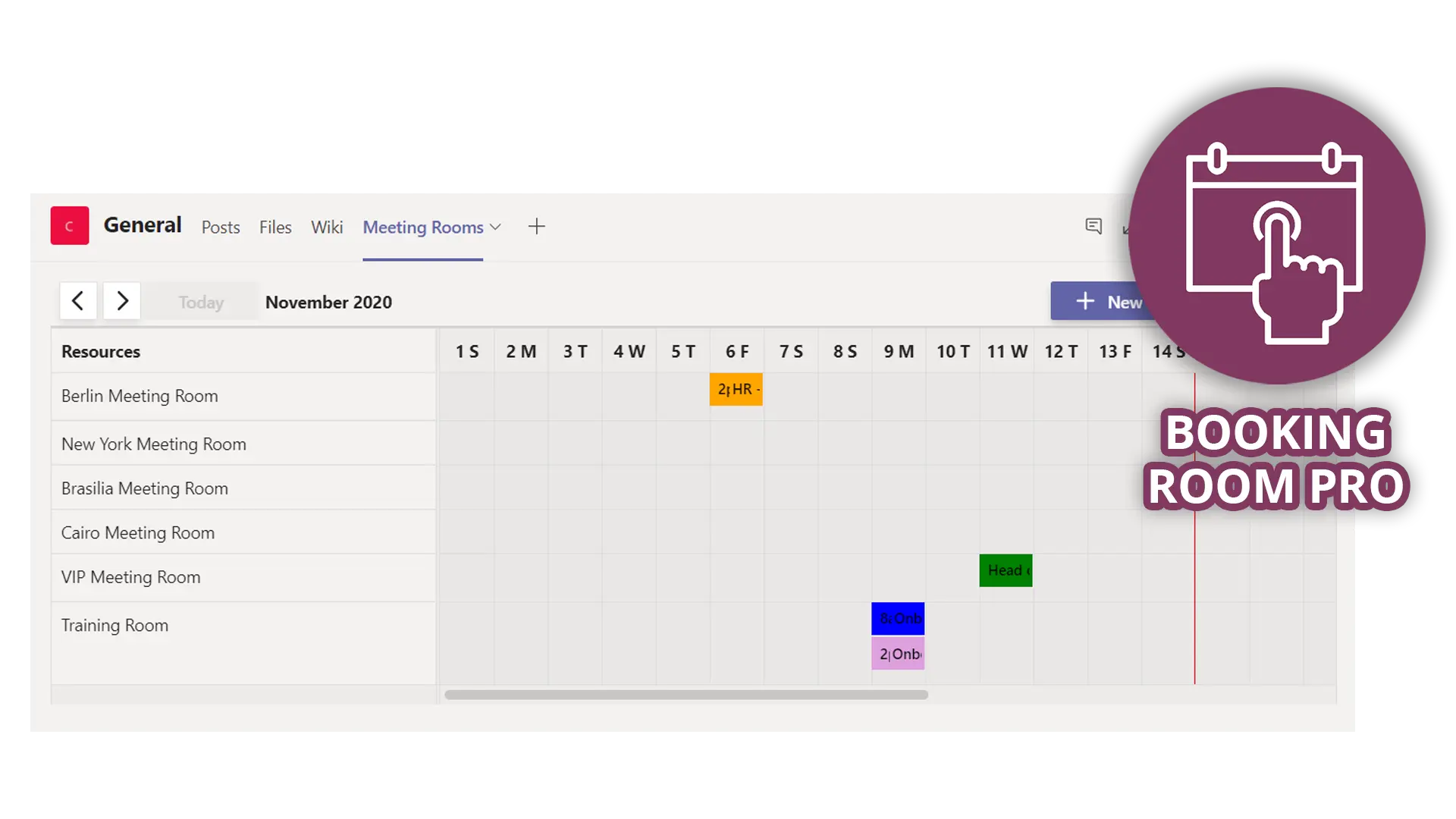
Following the basic set-up guide, add Parking Pro as a tab in your office channel, open Manage places and add places such as Carpool 1 next to the ordinary spaces. Per the Parking Pro Q&A, people select a time slot in the view to book. The carpool riding that day books the space, and a house rule says the booking names both riders. Everyone in the channel sees the board, so the coordinator checks one screen in the morning. If notifications are on, Teams notifies participants when a booking is added, updated or deleted.
The free plan covers up to 3 places with unlimited single reservations, enough to pilot one carpool space on a very small lot. Premium adds unlimited places, recurring bookings for carpools that ride on fixed days, tags, owners-only permissions, copy to Outlook and mobile access.
Know the limits. Parking Pro does not check that two people are in the car, issue permits, read license plates, open gates, match riders, log trips or arrange a ride home. There is no documented way to share one board across several channels. Add Parking Pro to your Teams channel and give your carpools a space they claim by the day.
Start with one space and four weeks
An employee carpool program does not need a commute-benefits vendor. It needs a close-in space, a rule that the car qualifies on the day, a light check and one other perk. Run it for four to six weeks, read the fill rate, then grow it or drop it. To measure the rest of the lot, see our guide to office parking utilization; if some spaces have chargers, see our workplace EV charging policy. Or try Parking Pro free.
Frequently asked questions
How do we reserve parking for carpools at work?
Pick one or two close-in spaces, after accessible parking, and let any car arriving with two or more people claim one for the day. Publish who qualifies, how to claim and who checks, then review the fill rate after four to six weeks.
What does carpool parking mean at work?
Carpool parking is a space reserved for vehicles that arrive with two or more people, usually close to the entrance. At work, the employer sets who qualifies and how it is checked. It is a different thing from the public carpool or park-and-ride lots that transit agencies run.
How do you enforce carpool parking?
With spot checks and a named coordinator, as the Federal Transit Administration recommended: compare the day's claims with the cars in the spaces. Hangtags or a monthly self-reported trip log on the honor system, as Perimeter Connects describes, are lighter options.
How many carpool parking spaces should we set aside?
No published benchmark predicts use. LEED v4 asks for 5% of total spaces to earn a certification credit (LEEDuser). Start with one or two spaces and add more only if they are claimed on most working days.
Are carpool benefits tax-free in the US?
Not the way vanpools can be. IRS Publication 15-B excludes rides in a commuter highway vehicle that seats at least six adults besides the driver, so an ordinary car does not qualify. Carpools appear only in the qualified parking definition, capped at $340 a month in 2026.