Every room shows as booked. Walk the floor at 11am Tuesday and two are dark. That gap between the calendar and the building is the whole problem with meeting room utilization, and five metrics from booking data you already hold in Microsoft 365 settle whether you need more rooms.
- Full is not the target: JLL's 2026 benchmark puts global office utilization at 56%, with the target-to-actual gap narrowing from 25 to 18 percentage points.
- Averages hide the crunch: CBRE reports 53% average utilization against peaks averaging 80%.
- Booked is not occupied: Microsoft states reservation data tracks intended use, and real occupancy needs call records or sensors.
- No study can tell you the right ratio of small to large rooms, which is why you measure your own building.
What is meeting room utilization?
Arguments about room supply are usually arguments about denominators.
Meeting room utilization is the share of a room's bookable hours that the room is actually in use: occupied room-hours divided by bookable room-hours over a set period, usually a week. Booked hours are not the same thing, because a booked room can sit empty.
CBRE publishes the closest thing to an accepted formula: utilization is office attendance divided by the capacity of the office. Room by room, it is the same arithmetic. The denominator is where in-house numbers break.
Meeting room utilization benchmarks: 56%, not 100%
In its Global Occupancy Planning Benchmark Report 2026, covering 84 organizations and 716 million square feet, JLL puts global utilization at 56%, up from 54% in 2025 and 49% in 2024. The gap between organizations' targets and their actuals narrowed from 25 percentage points to 18.
The middle tile explains your inbox. CBRE's 2026 Global Workplace and Occupancy Insights reports a 53% average against peaks averaging 80%, above the pre-pandemic 65 to 70% benchmark. Microsoft's telemetry agrees on meetings: Tuesday carries 23% of weekly meetings against Friday's 16%, and half fall in the 9 to 11am and 1 to 3pm windows. That reading covers the top 20% of users by meeting volume and excludes education and EU tenants. Both benchmarks come from enterprise portfolios, so read them as direction, not as a pass mark.
Nobody can tell you what your room mix should be
Search this topic and you meet the same claims: most meetings have two to six people, boardrooms sit empty, half your rooms should seat two to four. We looked for the primary sources and could not find them. The repeated "two thirds of meetings bring six or fewer people" is credited to Microsoft's Work Trend Index, and that report does not say it. Its meeting-size statement points the other way: meetings with 65 or more attendees are the fastest-growing type.
What is sourced is directional. JLL measures technical spaces, not boardrooms, at 45% against a 72% target on nearly 23% of managed space. CBRE's five-year series shows individual "me" space falling from 56% to 35% of total space while shared support space grew 35%. Neither publishes a target ratio. Nor are the firms with real estate departments ahead of you: in JLL's 2025 benchmark, only 7% rated their occupancy data collection as excellent.
Booked is not occupied, and Microsoft says so
Microsoft's Places documentation says room analytics uses room-reservation data to track the intended use of rooms, collected daily from Exchange room mailboxes, while actual occupancy needs Call Record Summaries from Teams meetings or sensors. Those call records are auto-enabled in North America, Europe, Japan and APAC, and arrive four days after the event. A room used for an in-person meeting with no Teams call attached looks empty.
One limit. Microsoft finds 57% of meetings are ad hoc calls with no calendar invite. A booking audit sees booked meetings only, so it understates demand. Enough to justify changing booking rules or room mix. Not enough to justify removing rooms without walking the floor and counting.
No-show benchmarks do not exist at a citable standard: every circulating rate we chased led to a vendor blog with no primary source. The one measurement we can stand behind is a case study: occupancy-sensor vendor Density reports that at one Fortune 500 customer, more than 25% of the 783 meetings booked across two locations were ghosted. A reason to measure, not your expected result.
Five metrics to measure meeting room utilization this week
Only the first follows an analyst-published formula. The rest are our arithmetic with no published threshold, so rank your rooms against each other.
- Divide occupied hours by bookable hours
Define bookable hours explicitly, say 40 a week, because the denominator alone can swing the result two or three times.
- Compare seats used to seats available
Attendees per meeting over room capacity times meetings held, computed per capacity band. Invited is not attended, so rank rooms with it rather than grade them.
- Count bookings with no sign of life
Bookings with no occupancy signal over total bookings. Reservation data alone cannot produce it, so this one waits for a check-in or sensor signal.
- Divide your busiest weekday by your average one
High peak with a low weekly average is a Tuesday-at-11 problem, not a room shortage.
- Track how far ahead people book
Median gap between booking timestamp and meeting start. Lengthening lead times may signal defensive booking under scarcity, a hypothesis to test.
Three things corrupt these numbers. Calendar, business and bookable hours give different answers, so state which you used. All-day and recurring bookings dominate booked hours while representing almost no occupancy. Small room counts make percentages unstable, so report absolute hours beside every rate.
What the native fix costs since April 1 2026
If the audit finds a no-show problem, the native lever is check-in with auto-release. The licensing here is narrower than the version circulating.
| Capability | License required |
|---|---|
| Booking rooms and workspaces | None |
| Checking in to a room or desk | None |
| Places finder and Places explorer | Core, moved down from Teams Premium |
| Auto-release of un-checked-in rooms | Space license (Teams Rooms or Teams Shared Space) |
| Occupancy reports in Places analytics | Space license |
| Individual desk booking | Space license, previously per-user Teams Premium |
Freeing a ghost-booked room automatically now carries a per-room price, while checking in and booking rooms require no license at all. Parts of the change went the other way: Places finder and explorer moved down to Core, and Teams Premium bought before April 1 2026 keeps its previous behavior until renewal. Microsoft states that a single $8 Shared Space license can be used to enable 4 bookable desks or bring your own device rooms. That per-desk model, and the two other native ways to book a seat, are covered in our guide to desk booking in Microsoft Teams.
Auto-release defaults to a 10 minute claim window, and changes take up to 48 hours to apply. Microsoft recommends restricting it to rooms with a Teams panel or Teams Rooms device so everyone has a way to check in, which assumes hardware many offices have in one room, not six. No published before-and-after measurement of check-in's effect exists that we could verify, so judge the mechanism on its logic, not on a percentage.
More rooms, different rooms, or better rules?
Read the five numbers together. High peak concentration with a low weekly average points at scheduling: move recurring meetings off Tuesday morning. Low seat-fill in your largest rooms points at mix: the conversion candidate is the room with the worst seat-fill, not the biggest one. A high no-show rate points at policy, where check-in and auto-release earn their per-room license. Adding rooms survives the audit only when peak is high, seat-fill is healthy in every band and no-shows are low.
Then size the stake. US office asking rent averaged $37.58 per square foot in CBRE's Q2 2026 figures, and JLL's 2025 benchmark puts space standards at 165 rentable square feet per person against a target of 132. Multiply your worst room's area by your own rate.
How Booking Room Pro helps
None of this works if bookings live in four places.
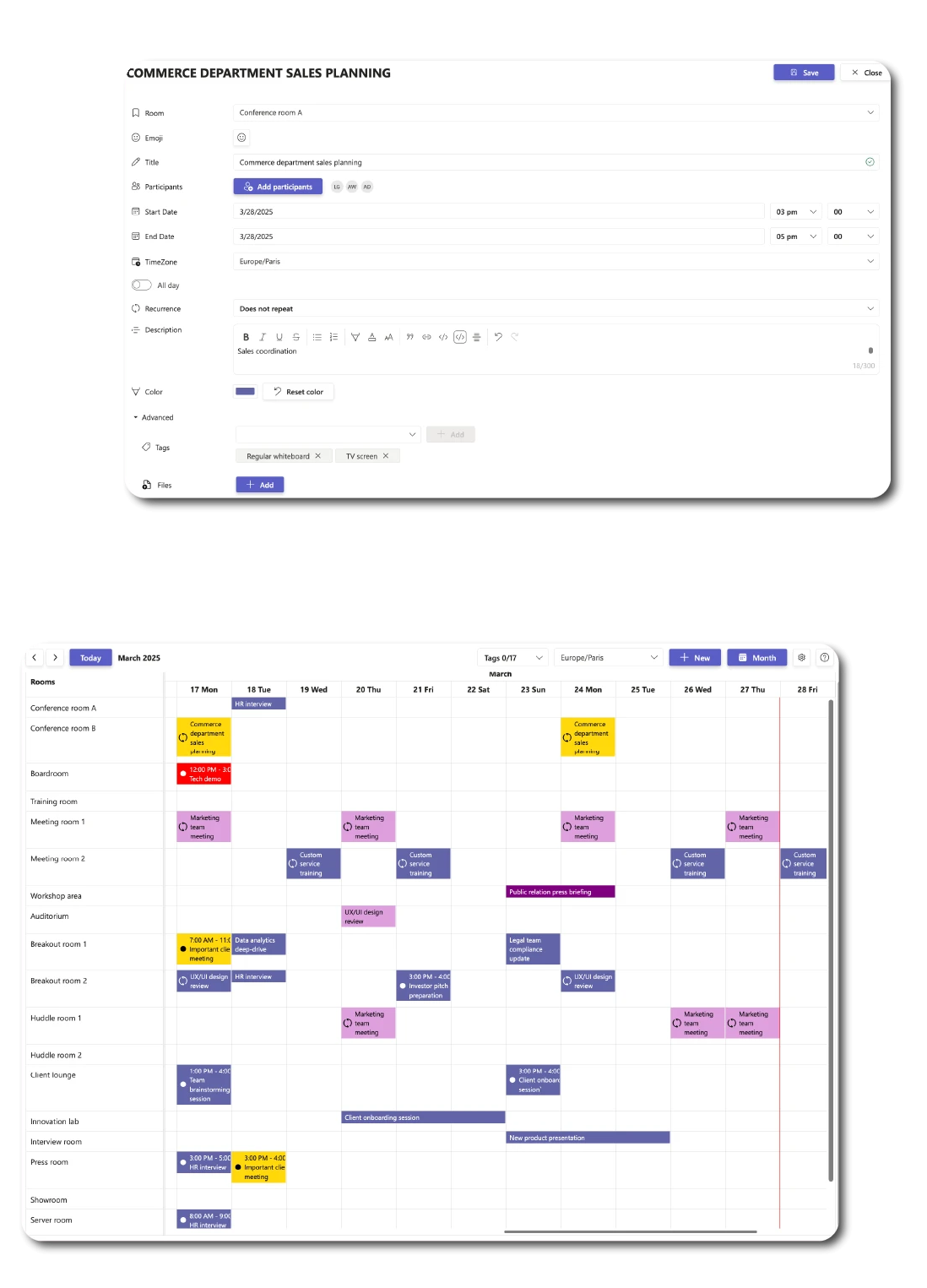
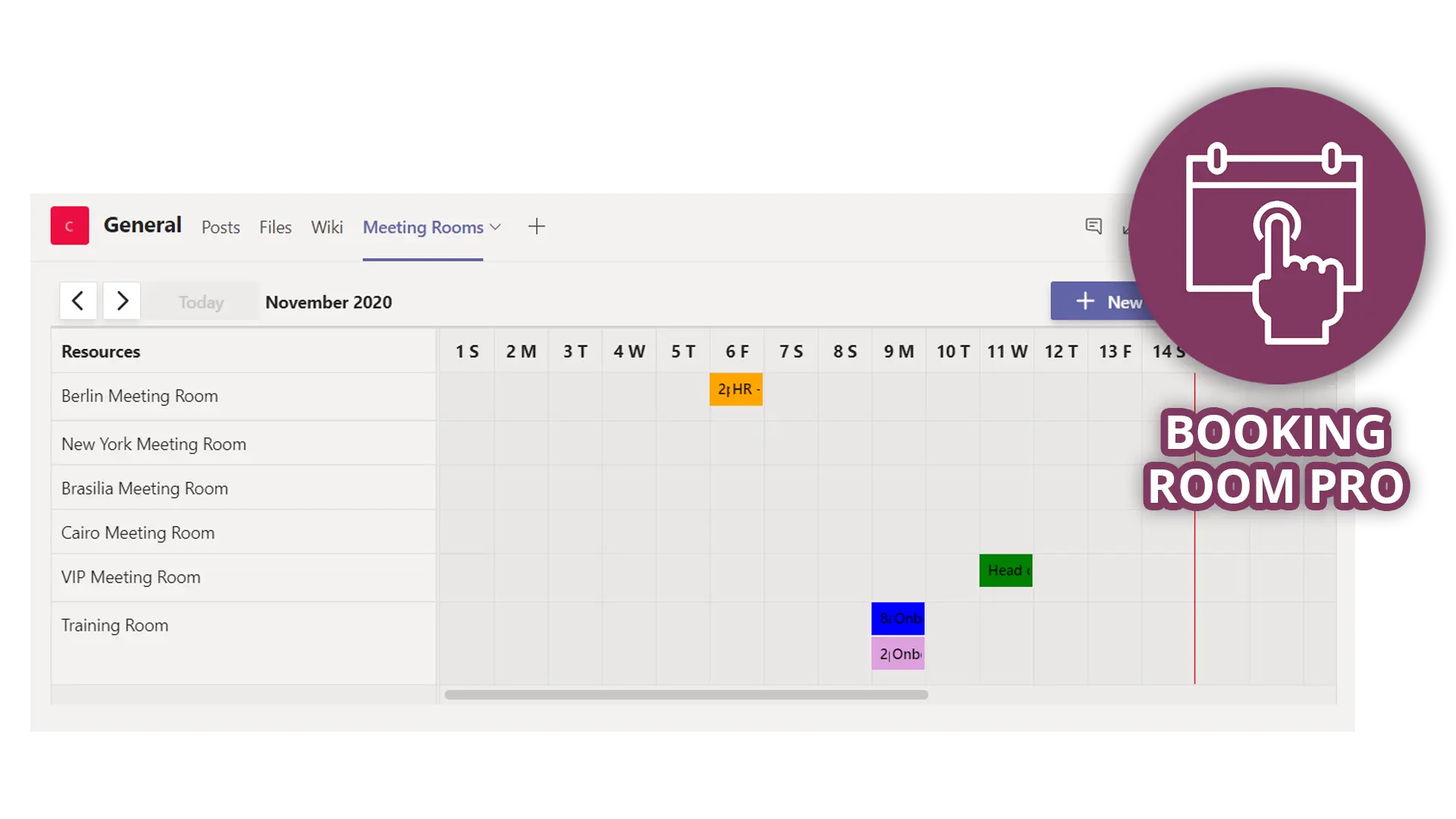
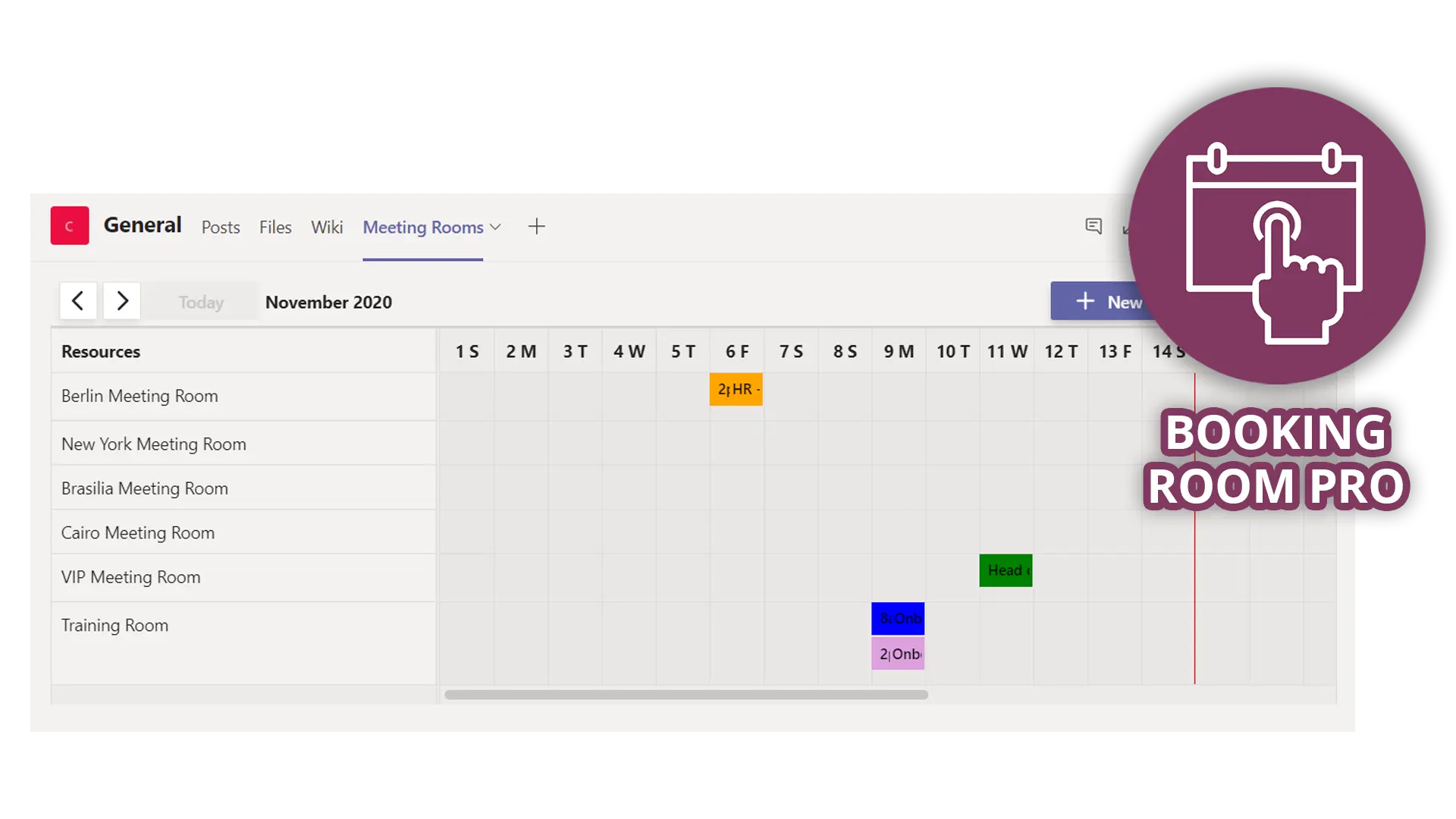
Booking Room Pro keeps room, desk and shared-space reservations inside Microsoft Teams. Availability is visible without leaving Teams, recurring bookings repeat on their own, and color coding and tags keep a week readable. The free Basic plan covers up to 3 rooms with unlimited single bookings, enough to consolidate a small office's booking record and start counting. For the mechanics of double-bookings and ghost reservations, see our guide to Microsoft Teams room booking. Start on the free Basic plan.
The one-week version
Pick a week. Write down your bookable hours. Compute utilization, seat-fill by room size, peak concentration and lead time, and leave no-show rate blank until you have a check-in signal. Compare the shape to 56%, not 100%. Then decide: short of rooms, short of the right rooms, or short of a rule about Tuesday mornings. If bookings are scattered, pulling them into Teams makes the rest measurable. The same method works for parking: see office parking utilization.
Frequently asked questions
What is a good meeting room utilization rate?
There is no published pass mark for individual rooms. The nearest reference is portfolio level: JLL's 2026 benchmark reports 56% global utilization against an 18 percentage point target gap. Rank your rooms against each other.
How do I measure meeting room utilization in Microsoft 365?
Start from reservation data, which Microsoft Places collects daily from Exchange room mailboxes. That is your conference room usage report: booked hours, capacity, day-of-week patterns and lead time. For occupancy rather than intent, you need Call Record Summaries from Teams meetings or sensors.
Does check-in require a license in Microsoft 365?
No. Microsoft's Places documentation states that checking in to a building, room or desk needs no additional license, and neither does booking rooms or workspaces. Auto-release, occupancy reports and individual desk booking moved to per-space licensing on April 1 2026.
How many meeting rooms does a company of 200 people need?
No analyst publishes a defensible ratio, and the room-mix rules circulating online come from vendor blogs without methodology. Measure seat-fill by capacity band and peak-day concentration in your own building for a week.